
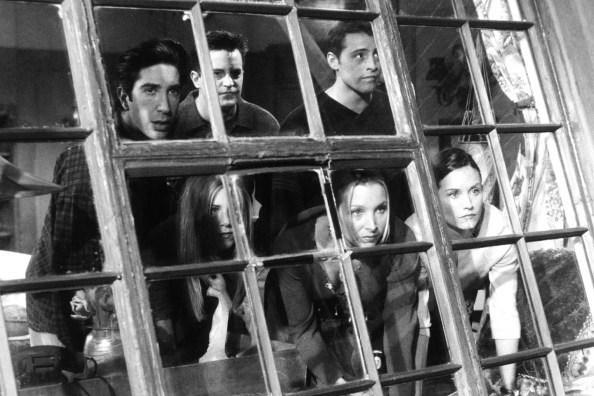
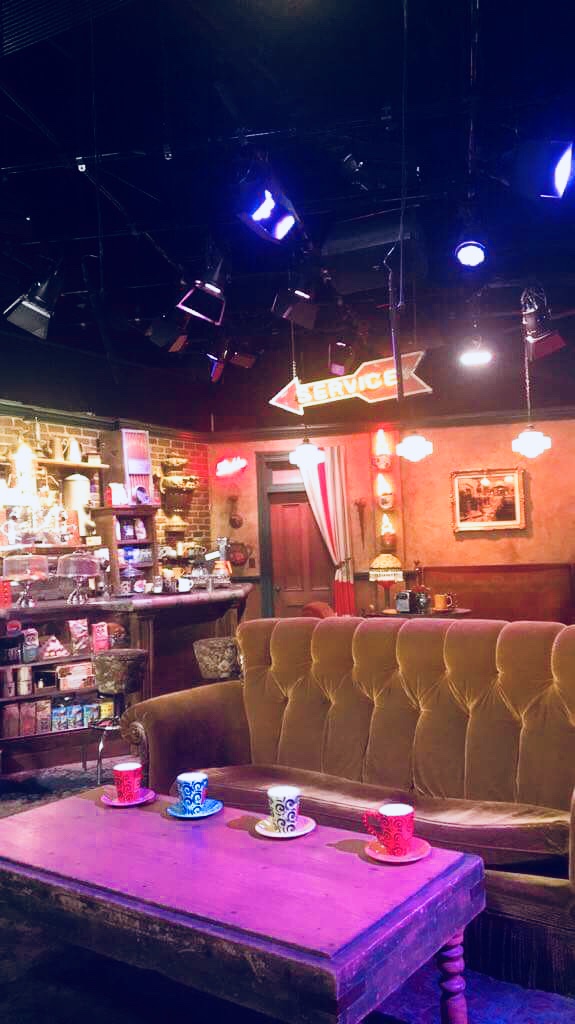
It was always on Channel 4 at 7pm. That was the hour that Nickelodeon finished and the darkly humorous musings of adult cartoons occupied the usually squeaky clean channel by day. That’s when I’d flick over to Friends, a sitcom that I’d grown up with, had eaten in front of and had frequently used as background noise. Looking back, it’s as if I’d always known the characters intimately, as if I’d never had to actually learn or make myself accustomed with their unique traits. Just like the Central Perk couch, Friends was simply part of the furniture.
The Friends Formula
Despite its rigid conformity to the staple US sitcom format of its time, there is still a distinct electricity evident which has ensured that Friends has not gone stale now that it is confronted with the contemptuous 21st century mindset. Many have belittled the show since its reemergence on the streaming platform, proclaiming that its views are outdated and the word of the century, ‘offensive.’ I would argue that any plot line that can be misconstrued as offensive can equally be seen as progressive as it aptly deploys humour to make sense of issues that hadn’t necessarily entered mainstream culture yet.
My mind is drawn to Ross’s first major plot point: the dissolution of his marriage due to the revelation of his wife’s admittance to being a lesbian. This transforms into a running joke that transcends season boundaries. Instead of merely harping on about the presence of a same-sex couple which a less sophisticated sitcom would have gladly utilised as cheap ammunition, the digs are aimed at Ross’s unfortunate romantic life. The unfortunate revelation that his wife would rather be with someone of the opposite sex than Ross himself, is not a degradation of lesbians, but a deep-seated and far reaching characterisation which will propel Ross into the various ill-advised romantic situations he finds himself in throughout the shows’ run. In my opinion, that’s where Friends made its name: they tangled their characters in real life webs and used this as a pun trajectory which would serve as a concrete, humorous reference point for the length of the series. Friends’ subtle nods to stories on the margins of society has illuminated a serendipitous leapfrogging dynamic: being ahead of the curve then means that they’ve landed on the normalities of the present.
The female characters are highly developed and arguably bring more nuanced societal issues to the forefront than the male characters. Monica, Rachel and Phoebe spearhead a number of storylines which brought 90’s and early 2000’s abnormalities into the discussion. Interestingly, all three women had what would have been regarded as unconventional pregnancies. Phoebe acted as a surrogate for her brother and his wife (‘Which one of you is the father?’ ‘Oh, no the father is my brother.’), Monica went down the route of adoption and Rachel decided to raise the baby on her own, with or without Ross’s input. Rachel’s character arc in particular is highlighted at this point as it’s a far cry from the young lady who, when she first came to the city exclaimed to the group, ‘So, you all have jobs?’ In fact, Rachel truly has rid herself of her spoilt status by this point and it feels natural to see her react in such a manner, rather than her decision being at odds with her character.
Pitch Perfect Comedy Formula – The Chandler Bing Effect
‘Comedy is simply a funny way of being serious’ – Peter Ustinov
In the pilot, Rachel arrives into Central Perk in a tizzy, wearing a damp wedding dress. Moments prior, Ross, still reeling from his divorce to Carol had serendipitously muttered, ‘I just want to be married.’ Having witnessed Rachel’s arrival, Chandler chimes in desperately and, announcing in the direction of the double doors utters, ‘And I… just want a million dollars!’ Brazen statements and searing, cynical jabs constitute the vast majority of Chandlers inimitable humour. These moments varied from astute observations (On Rachel walking in to the apartment in a fluorescent, puffy pink dress: ‘I’m sorry. We don’t have your sheep.’), to his acute, upended delivery of turns of phrases (‘Ok, rock. Hard place.’ Shifts his head forward, ‘Me.’). Chandlers’ unique offhanded quips serve as the cynical narrative for the friends’ situations.
Perry’s untimely passing in October 2023 was met with such profound sadness because of the terrible irony that the funniest among us can be the loneliest. Chandler’s humour in Friends was the comic relief that everyone needed, a neurotic, cynical and lovable character that Perry himself embodied. The absence of such a brash narrator would be disastrous: no storyline of note has been serious enough to not warrant a quippy one liner from his comedic narrative, a technique which ensures characters and viewers are quickly brought back onto level ground. In later years, when Perry would be routinely typecast as the joker, he would admit that if he was going to be typecast it was a good way to go. Perry was a one of a kind and from his reluctance to be put in a box at all, it’s unclear if he ever fully appreciated his unique talent. Perhaps he could never really see how he wasn’t being put in a generic box – he had created that box with his own incomparable humour. It really is one of the stand out performances from the series and will live on for years to come.
Chandlers quips, and indeed the varied humour spread amongst the friends act as pinnacles of internet comedy. Their one liners and iconic character ticks serve as the perfect vault of lines for an innumerable amount of internet references. These have propelled the show and its characters further into the modern mainstream. Netflix took note and pummelled its socials with one liners such as Ross’s famous ‘pivot’ scene. They famously used the ‘We Were on a Break!’ line to answer their own rhetorical question, ‘what does your partner say when you find out they watched ahead?’
There’s something comforting about watching a television series from beginning to end. It’s genuinely surprising how much a chronological approach can alter your opinion and enhance your admiration for such a show. With Netflix’s refined social media marketing approach, they’ve truly succeeded in embedding the Friends dynasty into 21st century culture. That’s why Matthew Perry’s passing was so deeply felt: his humour was so deeply intertwined with the humour of a generation making sense of a modern world. He wasn’t just a character, he was a characterisation of an emerging generation. That’s also why there’s been a Friends Renaissance happening: Friends no longer acts as background noise, but is a deliberate watch for millions of eyes viewing it through a modern lens.
 FILM FOR THOUGHT