
Distributors as the ‘invisible link’
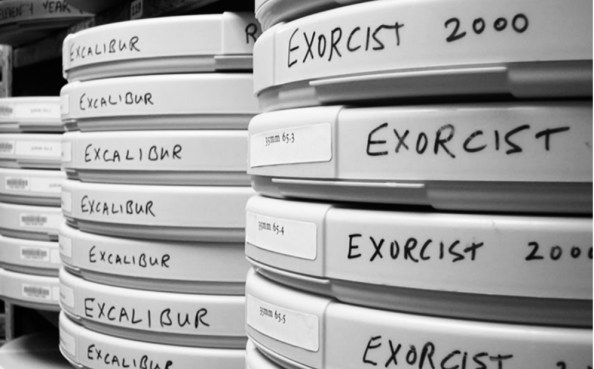
Film distributors have long since quietly operated as the ‘invisible link in the chain’ between production and cinemas, but their true robustness in a fragmented ecosystem was tested like never before than when the world came to a standstill with global lockdowns in March 2020. Far removed from the world of logistical distributors of physical goods which had their own sources of pain during the pandemic, film distribution companies could be described as more akin to ‘publishers,’ where during the pandemic the landscape for ‘publishing’ was equally ravaged. Audiences were forced inside, left to their own (digital) devices and they were hungry for stories. As distribution is ‘the ground upon which reception occurs,’ distributors found themselves in unchartered territory and were forced to reach audiences through a variety of different means and avenues. Where once distributors persisted at the centre benefitting from the ’hourglass effect,’ as the gatekeeper of films – it could be said that for the first-time the hourglass upended. This article will examine the changing role of distribution in a post-COVID world, examples of new and emerging distribution strategies, how the role of marketing is evolving, and the emergence of distributors as a brand.
Distribution, re-distribution and repeat
The Coronavirus pandemic for all its challenges, did not manage to change the primary business objective which distributors chase, which is to ‘maximise all of the possibilities to generate revenue,’ – the manner in which they achieve this has changed, however. Marketing and high production costs mean that distributors are under severe pressure within a constrained time frame to recoup their investment from license fees via ‘every possible source—as quickly as possible.’ The modern role of film distributors as licensors of films to clients such as cinemas, networks and DVDs, initially stemmed from the 1948 Paramount Decree in which the vertically integrated nature of the film business forbade studios owning all stages of the value chain. After this ruling, distribution essentially took on a new role as ‘the locus’ of industry power. As movies are strictly licensed, rather than sold, it is the distributors’ primary task to engage in the practice of creatively generating opportunities for repeat consumption, for what essentially is the same product, again and again.
The ’online threat’ and the confluence of COVID-19
The logic underpinning the traditional model post-Paramount Decree, was to strategise and manage consumption through distinct viewing periods, with the distributor ensuring unique value was added to the customer at each stage. The rise of streaming, compounded with the pandemic however, meant that when it comes to the four value drivers distributors add to staggered windows comprising of exclusivity, repeat consumption, time and differential pricing, digital platforms tend to eliminate at least one value driver. As will be detailed further on, the pandemic accelerated the breakage of theatrical windows as a result of the rise of ‘direct to digital,’ bringing the online threat to the forefront.
The online phenomenon in the film industry emerged innocently enough, proposing an efficient way to the trading of goods in that it no longer took place in the form of physical prints being shipped to cinemas. Instead, high security encryption has meant that ‘artefacts we call ‘films’ increasingly circulate as ‘files.’ The broad, menacing threat labelled ‘the internet’ has haunted businesses stuck in their ways for decades, with Sparrow noting how this open environment is similar to a ‘superdistribution’ channel, the speed of the act of distribution exponentially accelerated by the switch from physical to digital.
Streaming or OTT (over the top) distribution like Netflix distributing a billion hours of video content per week, (a significant proportion of which they have developed and produced), shows the Paramount Decree has clearly not been rewritten for a digital age. A new version of the old studio system persists ‘with the production chain completely integrated from production to distribution.’ The shift to a hybrid online world however is not a panacea and presents its own challenges, as Tom Quinn from distributor Neon said last year, it is important to avoid the digital abyss, as just because a film is online doesn’t necessarily mean it is found.
The erosion of value drivers with viewing windows impacted by COVID
The COVID-19 pandemic was the first true test of the robustness of the distribution stage of the film value chain and tested what value distribution has long since added – or held back. As distribution standards had been created by the studios in the first place, this ‘spatial and temporal separation of markets,’ was strategically designed to eke out a set of value drivers for this stage of the chain. This strategic move was created so that distributors could maximise profit, whilst also minimising cannibalisation between windows as much as possible. Viewing windows therefore emerged as rigid, chronological stages comprising the lifecycle of a film, with more expensive window formats (eg. theatre) initiated earlier and less expensive formats emerging later (eg. DVDs). The pandemic was widely hailed as halving the viewing windows from 75-90 days to 30-45 days, but it had actually been shrinking gradually over time, moving from 190 days in May 1999 to 125 days in April 2006.
According to Greenwald and Landry a customer will not pay to see a movie in one format if they can view it in a less expensive one. While this is an economically sound statement and a belief that distributors have long since held, the pandemic proved that what may have been true in the past is not true now. In 2021, distributors released a joint statement to condemn Disney’s decision make The Black Widow (2021) available to rent at the same time as its theatrical run, letting that dreaded cannibalisation of windows take hold, completely unrestrained. Whilst COVID-19 has forced distributors’ hands into shorter, more streamlined windows, windows that are put live concurrently, are not always a disadvantage to distributors. This was seen with Croods: A New Age (2020), the family friendly film that had climbed to the top of the box office in its 12th week towards the end of the first year of the pandemic. Whilst an achievement in itself for a film to gradually reach the top so far along after its initial theatrical release, it reached this milestone whilst it was simultaneously available on Premium Video on Demand or PVOD. As Chris Aronson Paramount domestic distribution president noted of the phenomenon, ‘there are different customers out there.’ As the logic behind the windows have been historically economically driven, and not based on different desires of consumers to watch the film, the COVID-19 pandemic illuminated how ‘creaky’ the legacy system had really been, and that revenue opportunities are not as clear cut as once believed.
 FILM FOR THOUGHT