
Go tobann
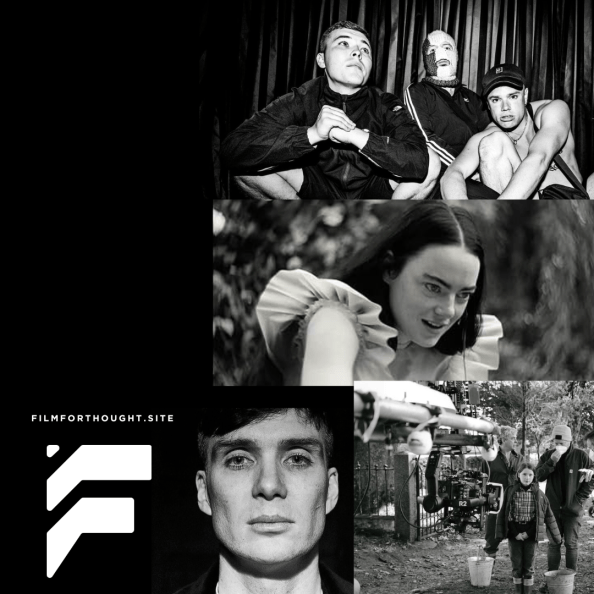
Last year, Ireland boasted a record-breaking 14 Oscar nominations, including the country’s first ever Irish-language nomination with An Cailín Ciúin. This year is a close rival with 12 nominations comprising Cillian Murphy’s best actor nod, and a glorious eleven nominations for Poor Things, produced by Dublin-based Element Pictures. It is also an era of ‘firsts’ for Ireland in film. The first Irish-language film to be shortlisted for an Oscar in the Best International Feature category; the first Irish-language film to premiere at the Sundance Film Festival, the first Irish language film to debut at the Berlinale film festival. The common thread is that Gaeilge is making a splash on the international film circuit, something practically unheard of ever before. Go tobann, Gaeilge is cool again – so cad a tharla?
Irish isn’t spoken here? It isn’t
A quick look at the state of the affairs even a few years ago will show how far we have come. An infamous short film called Yu Ming is Anim Dom (2003) cryptically demonstrates the irony of having a national language relegated to only a few regional areas, with just 2% of the Irish population speaking Gaeilge daily according to the latest Census. When the main character reaches Irish shores he by chance meets a fellow Gaelgoir. ‘Irish isn’t spoken?’ Yu Ming asks. ‘It isn’t,’ the older man sighs.
There is a famous saying in which ‘the Irish did not draw attention to being Irish,’ particularly at the beginning of the 20th century and for this reason such an agreeable nation emerged as a cultural-spiritual halfway house’ for the English-speaking world, namely the UK and the US, relegating its own indigenous language to the classrooms. A flexible culture with an endangered national language and policies that encouraged inbound international production indirectly conspired to prevent the language from reaching the international stage. That is, until deliberate moves to cultivate and foster the Irish language were finally made.
Follow the money
But what is spurning this revival? First of all, culturally the Irish language is undergoing a revival among the younger generations. For Generation X, Irish was (literally) beaten into them, leaving such a strong resentment for the language that for decades it remained shunned, rather than embraced. Fast forward to today and it is estimated that over 1 million people are learning the language on the educational linguistic app, Duo Lingo. There is a sense of pride and excitement around the language, with a whole section of our history completely unexplored in a creative sense.
Second of all, and most importantly – there is money available to producers making Irish films now that was not available before. While early iterations of Ireland’s National Film Board, have in theory supported the development of an indigenous language cinema, experts have commented ‘the potential audience for such a practice is so limited that finance and expertise have militated against its evolution.’ In 2017 however, a turning point emerged with the creation of a brand-new development fund called Cine4, a joint venture between TG4 (Gaeilge broadcaster), Screen Ireland (formerly, The Irish Film Board), and the Broadcasting Authority of Ireland (BAI). The objective of developing feature films in the Irish language with modest budgets, according to Director General of TG4 Alan Esslemont came from the belief that ‘high-prestige cinema could form part of status planning for the Irish language. Through Cine4, five projects that require €1.2 million budgets are considered, with two chosen to be greenlit for production. Before this scheme, feature films in the Irish language were extremely rare, with An Cailín Ciúin’s director Colm Bairéad describing this absence poignantly as ‘a silence,’ of the language on screen, and the Cine4 scheme acted as a corrective to that.
An Cailín Ciúin
One of these films benefitting from the Cine4 scheme was An Cailín Ciúin. A sweet film about a reserved girl sent to live with relatives on a farm in the 1980s, it would go on to become the highest grossing Irish language film of all time and the first to exceed £1m at the Irish and UK box office. Roddy Flynn noted the anomalous success of the film, truthfully stating that ‘even in Ireland, the film’s use of Irish sets it apart.’ The linguistic aspect of An Cailín Ciúin was not only the basis for its funding but acted as an unexpected cultural salve on reception, as while many Irish people resent the language, the film was so accessible that people felt comfortable to re-engage with the language that was far from the stuffy classrooms of yore.
Kneecap
What better way to immerse yourself in a language than through the medium of rap? At the Sundance film festival just a few weeks ago, audiences were treated to the latest export from Ireland, Kneecap. In a post-Good Friday Agreement Belfast, the next generation of Northern Ireland youths are finding their place in the world, with rebellion, disenchantment and anti-establishment baked into them. ‘The Troubles?’ one of the main characters asks against the backdrop of bombs going off, ‘I’ve got f-ing troubles.’ The film follows a real life rap group called Kneecap, charting their rise in to fame as Republican rappers. Known for courting attention, (the name Kneecap even is derived from the well-known form of intimidation of shooting someone in the knee to signify a warning to them and their community), the group are basically made for the limelight and provide the likes of Rolling Stone with strong soundbites ‘We do like a bit of ABBA before we go onstage. A bit of Gimme! Gimme!’
The band’s origin story follows their real life beginnings when they got involved in the Irish Language Act March in Northern Ireland when protestors called for the Irish language to have equal status to English. One of the band members, Móglaí Bap and his friend had spray painted the Irish word for ‘rights’ (cearta) in public areas, for which his friend was arrested and would only speak Irish to the police. This would spurn the rap trio on to write their first single, ‘Cearta’, essentially pioneering a creative form of political defiance through rap. Such a unique, creative and contemporary approach to an anti-establishment practice was enough to grab the attention of film producers. It was financially backed by the likes of Screen Ireland, TG4, BBC Northern Ireland, and incredibly the British public from National Lottery Funds via the BFI (British Film Institute) and is set to be released later this year.
The Irish language and IP ownership
These films have reignited a debate on the role of the Irish language, and if that renaissance will assist in reclaiming a unique aspect of the country’s identity, further enhancing this by showcasing this internationally. Director General of TG4 Alan Esslemont believes that while funding like this is essential for indigenous language development to process, support at a government is fundamental to scale. Esslemont has previously branded the Irish government as being ‘staunchly monolingual,’ intimating that a cost-benefit analysis along the way must have decided ‘that the Irish language fails.’
The Irish film industry’s transient nature with a lack of IP ownership seems to point to Gaeilge as a key driver of growth in ownership of what the country produces. ‘We’ve given local, intellectual property a hand up and the ability to move a little further on,’ Alan Esslemont at TG4 proclaimed. A report by PWC on the screen industries identified IP creation as a key opportunity ‘for a self-sustaining industry able to re-invest in itself.’ With just 2% of the population speaking the language on a daily basis however it would be naive to assume that assume that Gaeilge will be the saviour of Ireland on screen as there are undeniable co-production realities which will continue to drive inward growth – but it certainly helps.
Tá an todhchaí geal – The Future is Bright
The Irish film industry is on a winning streak at the moment, with the Academy Awards a glistening example of the diverse and multi-faceted nature of the modern Irish film industry. Irish-filmed productions, Irish co-productions, skilled film industry Irish diaspora and completely Irish-owned IP films – all standing alongside each other in harmony. These films represent what has become modern Ireland on screen: a healthy embrace of the benefits of international productions and strategic co-productions, with a keen eye towards fostering the development of domestic production and cultivating a unique niche that fosters and encourages a language historically discarded to the side. In the years to come, it is likely we will see further emphasis on the Irish language as we tell stories via a language that is undergoing a true cultural renaissance.
 FILM FOR THOUGHT