
This week Paul Schrader rubbished reviews of a Taxi Driver sequel (thank God), and that while Robert De Niro was on the fence, Schrader couldn’t be persuaded for love nor money. ‘That character dies at the end of the movie. He’s gone,’ he said to journalists as he promotes his newest film at the Cannes Film Festival – Oh, Canada. What’s not gone is Schrader’s mastery of character and is very much alive and well.
Oh, Canada tells the story of Leonard Fife, one of sixty thousand draft evaders and deserters who fled to Canada to avoid serving in Vietnam, who is set on sharing all his secrets to unpack his mythologized life. Fife is fighting cancer – “not the good kind,” – and it’s at this point when he’s at his weakest that he wants to be exposed, with all his secrets and regrets unearthed.
Yes is it a man spewing out existential ramblings. And yes maybe instead of a man alone in his room with his diary (Taxi Driver, First Reformed, The Card Counter) he is doing his own video diary as a documentary filmmaker in his final days. But it is handled in such a fresh and not overly stylistic way. Based on a book called Foregone by longtime collaborator and friend Russell Banks, apparently the book was initially meant to be called Oh, Canada and the film is even dedicated to Banks. Unlike another Banks collaboration, Affliction, which is equally plot and character heavy, Schrader isn’t saddled with the weight of the source material, and handles it so smoothly
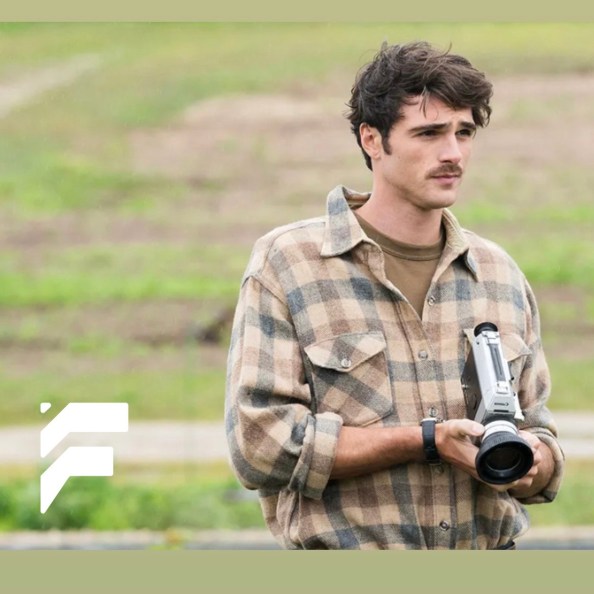
Richard Gere’s performance as a deeply imperfect but remorseful man is electric, and his younger counterpart Jacob Elordi is a surprise delight despite some controllable inconsistencies like accents, and other uncontrollable elements like height. Gere’s character is staring down the barrel of the camera like he’s staring his own life choices down. His significantly younger wife meanwhile, played by Uma Thurman, is his literal eyewitness, deliberately seated sideways like a confessional pod.
Fife is so sure and yet so confused about the countless faces he has scorned, and the amount of bodies he has come into contact with that in recollections they are all intertwined together in a tapestry of indifference and neglect. It strikes me that perhaps in demythologising his life, Fife may have deliberately been leaving out anything good in his life he has ever done. In such a way his adored reputation as a documentary filmmaker externally, must be countered only with the ugliest truths in his life. After all the women he ran out on, one after the other, this penchant for running brought him to the border of Canada. Now in his deathbed, he’s on the border of this life and the next, and he’s determined to go out on a clean slate.
Schrader’s direction is exquisite, but of course it is his writing that stands head and shoulders above the rest. He’s still got it, and best of all it’s fresh and exciting.
 FILM FOR THOUGHT