
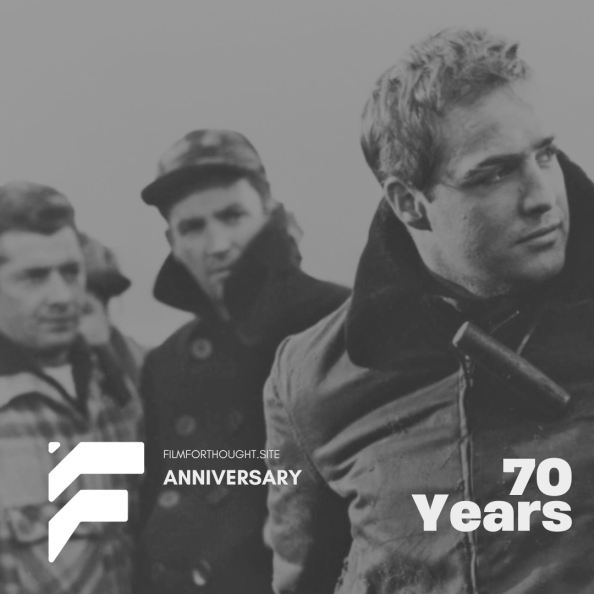
Its been seventy years since Marlon Brando changed film history for good. A staunch defender of any sort of criticism, he didn’t like (or trust) people who praised him in his lifetime so it’s a guarantee he wouldn’t like it now he has passed. Maybe that’s because film is one of the most collaborative artistic mediums and calls on hundreds, sometimes thousands of people to do their job right just so an actor has a chance at making something close to special. One of those inputs is of course the screenplay, and as the old adage goes everything starts with the script. But first, some background.
The thematic thread
In Elia Kazan’s seven hundred plus pages of his biography A Life, he recounts his younger years in New Rochelle, New York where his immigrant father’s protestations reached fever pitch when the young Kazan decided to pursue acting rather than stay with the family business in the rug trade. After college he joined the Group theatre in Manhattan and was instrumental in founding the infamous Actors Studio, aswell as how he got involved with the Communist party. His time in the Communist party is detailed extensively, and it becomes clear how it was possible to be a young man and get caught up in a movement that felt progressive at the time. A defining moment in the autobiography and in his life, is Kazan’s controversial testimony at the House Un-American Activities Committee where he named names of peers that had had ties to the communist party. Kazan wrote that “the big shot had become the outsider,” and his sense of being the outcast was reflected in his magnetic direction in On the Waterfront two years later. On the Waterfront gave Kazan free reign to air out his grievances, to use Brando as an emotional tool that would take you through Kazan’s thought process during those proceedings. Why he was left between a rock and a hard place and ‘outed’ the very people he had been closest to. It is the very essence of his wrestling with his conscience and doing the right thing that On the Waterfront portrays and acts as the thematic thread during the film.
A script is born
Budd Schulberg isn’t a name that rolls off the tongue, but the words he wrote did. A screenplay about longshoremen in Hoboken was probably a world away for Schulberg who grew up relatively privileged as the son of a film producer in Los Angeles, but he managed to perfectly capture the true plight of longshoremen in 1950s Hoboken. That synopsis does nothing to convey the nerves of steel you must call on to watch these broken men, who have no other choice but to engage with the pressures inflicted upon them by the local mob.
Thou shalt tell the truth
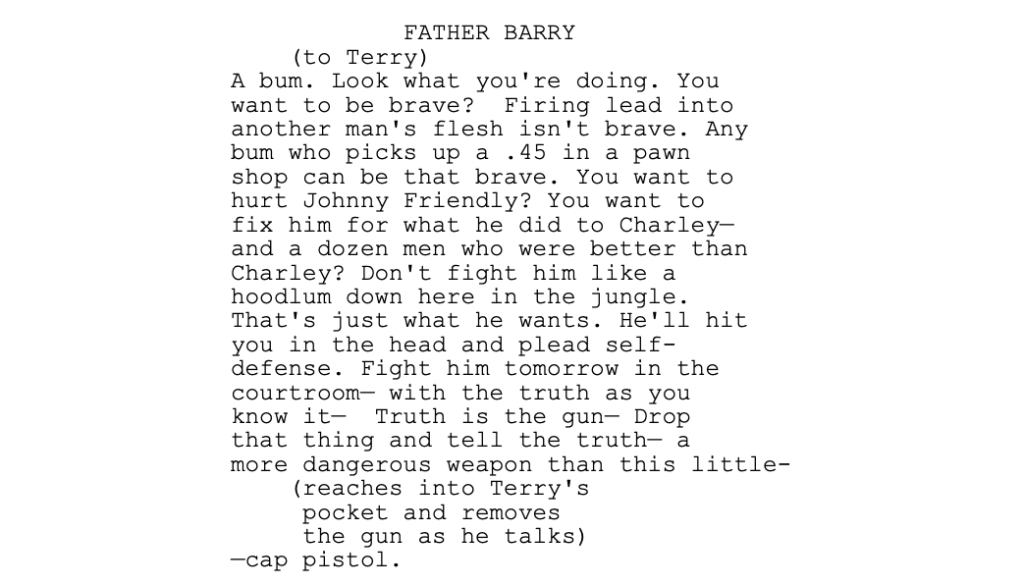
There is much talk about Kazan’s direction of this film and the way he used the themes to bring cinematic brilliance to the screen. Specifically, the imagery used throughout the film calls on religious symbolism that perfectly encapsulates and serves as a shortcut to the sentiments that Brando’s character goes through in his fight against his own conscience. The ultimate message of this film is a commandment (or a plea) to tell the truth – despite what it might cost you. What it does right is not forcing someones’ hand or snitching on someone because of deeply held resentment or malice, it is that pure human feeling to tell the truth because that is the right thing to do – no matter what it costs you, and no matter who gets hurt – including yourself. Its telling that the priest is ultimately the one who pushes Terry in the right direction, spurring him on to fight with his words rather than his fist, and we see a change in Terry’s character when he realises that ‘the truth is the gun.’
The tug between good and evil
Elia Kazan took a bet on Eva Marie Saint when he cast the young inexperienced ingenue as Brando’s love interest, with On the Waterfront her first feature film credit that would lead to a long and fruitful career. Make no mistake – Saint was not brought in purely for her beauty, because there’s no doubt other lookalike Grace Kelly’s of their time would have brought a similar level of feminine guile to the role of Edie. She embodies an innocence and virtue that is the essential unravelling of Brando’s troubled character Terry, a retired prize fighter who continues to wrestle emotionally with his brother’s entanglement with the mob.
Beyond the plot entanglement of Edie having lost her brother Joey to the immoral thugs Terry’s brother is involved with, Edie acts as Terry’s love interest which perfectly sets up the dynamic from the get go. Where Saint portrays Edie in her most vulnerable moments, she incredibly displays fleeting indications of strength in the most understated manner. In the beginning, Terry has his fists up when he is around her, having lived a life where even what is good eventually crumbles into bad anyway. ‘They thought they could beat an eduction into me – I foxed ’em,’ Terry brags emptily. Edie sees through his facade that is propping up his hurt, countering with ‘Maybe they just didn’t know how to handle you.’ Her soft and gentle prods and counter points at Brando’s troubled disposition serve not only as the films’ solitary female opinion, but as the audience’s moral conscience.

What Schulberg got right was not only in the complexity of Brando’s character, after all we as an audiences can always identify with the thwarted and damaged soul like Bogart or Brando, with their defensiveness and street gall their most infamous draws. But arguably it was the delicately crafted character of Edie, whose opposition to his defensiveness brought the richest scenes that would lead perfectly to a defiant ending. The best characters after all are illuminated through their interactions with others, and here we see that lovely tug between good and evil play out on screen. Ultimately, it is Saint’s portrayal of Edie that resonates as reflections of our own longing to want to do better. It certainly was for Terry, who used the power of good and morality to put himself at risk in favour of the greater good.
Thanks for reading. Make sure to catch On the Waterfront in 4K restoration coming to select theatres on Friday 5th April 2024.
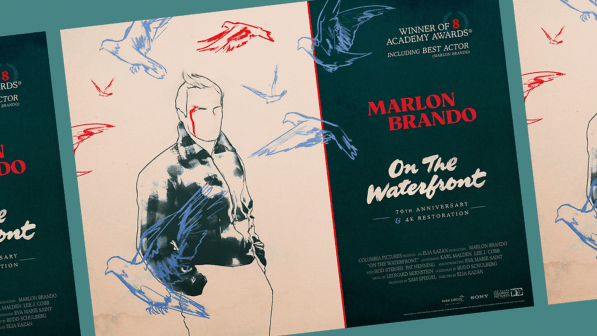
On the Waterfront will be re released one week from today on Friday 5th April 2024.
Tickets for London are available through Curzon here
 FILM FOR THOUGHT