
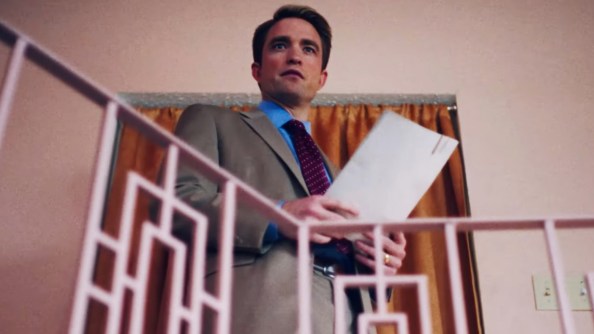
Chris Hansen is not a bad man. The men who he catches are bad men. That’s the hook for Hansen’s show Predator, which essentially lures pedophiles into a faux suburban house under the guise of having been conversing with a child on the internet. Hansen himself is a middle aged NBC reporter who thrived in the early 90s broadcasting ‘always on’ culture (OJ and the Bronco changed everything.). But set in 2006, Hansen is struggling with the drive to break boundaries in the pursuit of ratings. It’s the age of the Iraq War and unscripted, reality television with the emergence of America’s Next Top Model and the like dominating the charts and beating scripted television for the first time ever.
The subject matter is absolutely vile, and that taintedness is absolutely present – how could it not be – but Lance Oppenheimer has infused Hansen and the swathe of exceptional supporting cast with such depth that they are what the audiences focus on, not the pedophile that gets lured in. We see Dan Plum (played by Skylar Gisondo) a young and optimistic 23 year old actors who loves musicals. He’s just looking for a SAG card so he can get health insurance, so he takes a job for Hansen as ‘Dan the Decoy’ who beckons the pedophiles in before leaving them alone with Hansen who tears them apart by reciting their lewd messages to them. Dan is motivated by jealous actor friends who didn’t make it, to succeed, despite being traumatised by the seedy and vile interactions with these predators.
Hansen appears together in the beginning. His show is a hit for NBC despite the heads of the network not understanding the concept. They decide to move it to primetime and it’s akin to being knighted. To keep that primetime slot however, they have to keep pushing to ensnare someone significant, catch bigger fish, maybe a whale – maybe even a Congressman. He becomes increasingly obsessed with taking down someone in power that he follows a very weak lead to do so. He sees his job as a vocation, a factory that simply can’t stop. His motivation is simple, if he wasn’t there – what would have happened? But the law of unintended consequences always has something to say.
The antihero is so overlooked in modern cinema, but it is where complexity and depth thrives. Jake Gittes in Chinatown is a perfect example of a man driven by a relentless desire to ‘do good,’ and ‘catch the bad guys,’ but he is oblivious to the bigger picture at play. An ex-cop having set up his own Private Investigator firm, he wants to be rid of the seedyness and corruption he witnessed in Chinatown. He wants to do the opposite. He is so enamoured by his own ability to counteract the evil overlords of corrupt government officials that he will do anything but get involved in what they do. He thinks he’s doing God’s work in comparison to the folks in Chinatown but of course he overlooks the fact that his own business takes sleazy photos of his clients wives through windows and calls it ‘the greater good.’
The anti hero is deeply flawed, but obsessively motivated in their goals. Most importantly their reasons are always justified, and unlike a hero who is unmotivated by ego – the anti hero may be selfish and have a warped sense of good and evil. But that’s what makes them so fascinating. Chris Hansen seems noble on the outside, he catches pedophiles for a living and berates them on national television before incarcerating them. But when the lines start to blur between the pursuit of fame and ratings and the righteous pursuit of good and evil, that is when audiences really want to tune in.

